Pretty Edible Plants
Fruit & Nut trees, shrubs, vines and more
Pretty Edible Plants
Fruit & Nut trees, shrubs, vines and more
Pawpaw
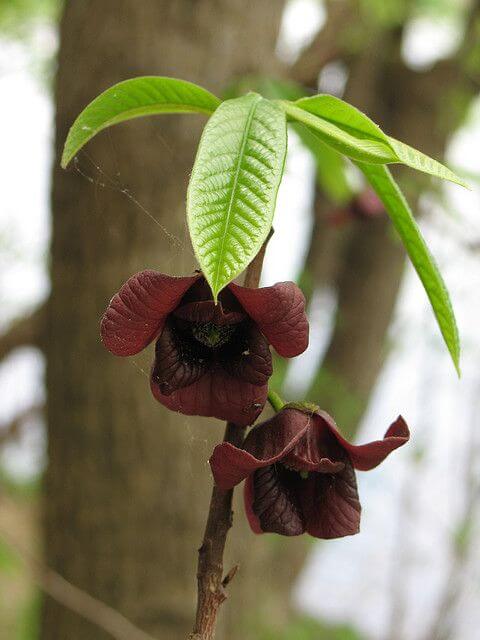
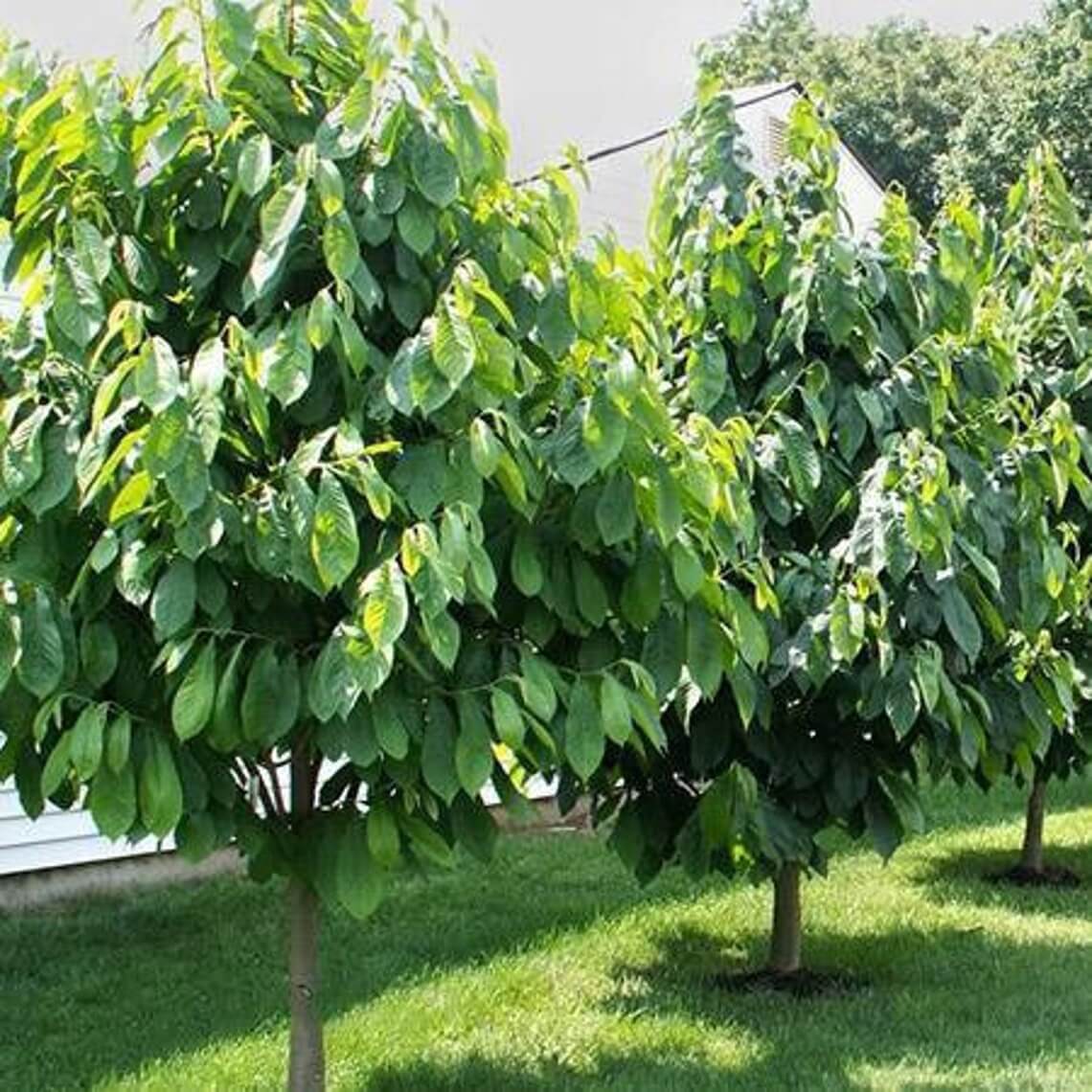
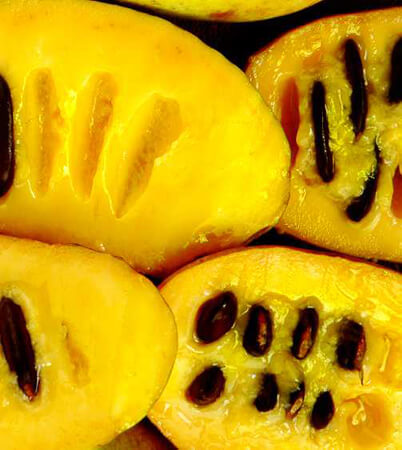
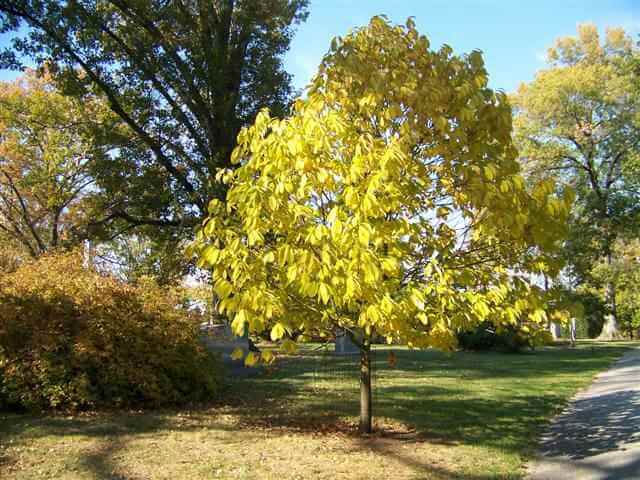
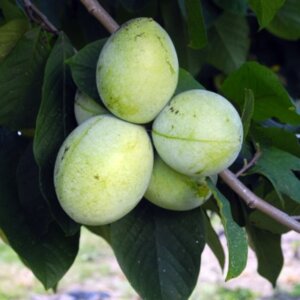
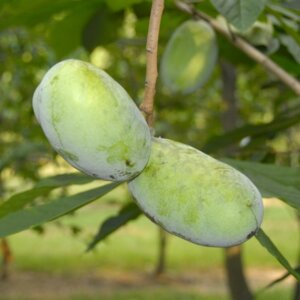
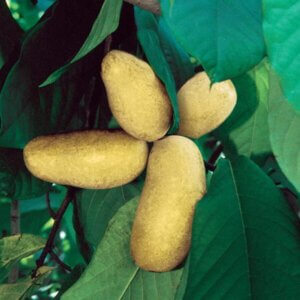
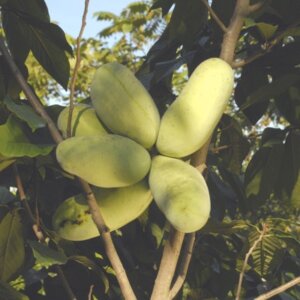
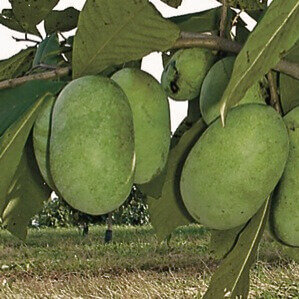
Grow this hardy, native American fruit and bring a taste of the tropics to your table. A relative of Cherimoya and several other tropical fruiting plants, Pawpaw is uniquely hardy to at least -20°F (USDA Zone 5). Pawpaw fruit combines a delectable, fruity, banana/mango/strawberry flavor mixture with creamy, custard-like flesh. Nutritious as well as delicious, the greenish yellow, 3″- 6″ long fruit is unusually high in protein and is a good source of vitamins and minerals. A slow growing, small tree, Pawpaw is naturally disease and pest resistant and features long, tropical-looking foliage that turns a striking bright yellow in the fall.
Not all Pawpaws are created equal! Wild Pawpaw fruit can vary widely in quality and flavor. It is said some are so good it’s like eating banana pudding, while others taste so bad they are better for throwing than eating! This is why it is so important to obtain your Pawpaw trees from a reputable source. The Pawpaw varieties we have available are grafted, named varieties that have been carefully selected to bear fruit that is early ripening and of excellent quality and flavor.
Pawpaws prefer 1/2 day to full sun, well-drained soil and are not bothered by pests or diseases. They mature at a height of about 12-15 ft. and require 2 different varieties for pollination. The flowers – which are designed to attract beetles and flies for pollination instead of bees – show up in April and the fruit ripens in September-October. Each tree can produce 30+ pounds of fruit at maturity and should begin to bear about 4-5 years after planting. Please note: Pawpaw trees grow an impressive taproot that if cut or damaged will kill the tree! Therefore, please be sure
to plant your tree where it will never need to be moved.
It is highly recommended to install a tree shelter such as the ones you can find at www.plantra.com around your new pawpaw tree(s). We have found these shelters to greatly increase growth, health and survival in young pawpaw trees.

Shopping Cart