Pretty Edible Plants
Fruit & Nut trees, shrubs, vines and more
Pretty Edible Plants
Fruit & Nut trees, shrubs, vines and more
Serviceberry


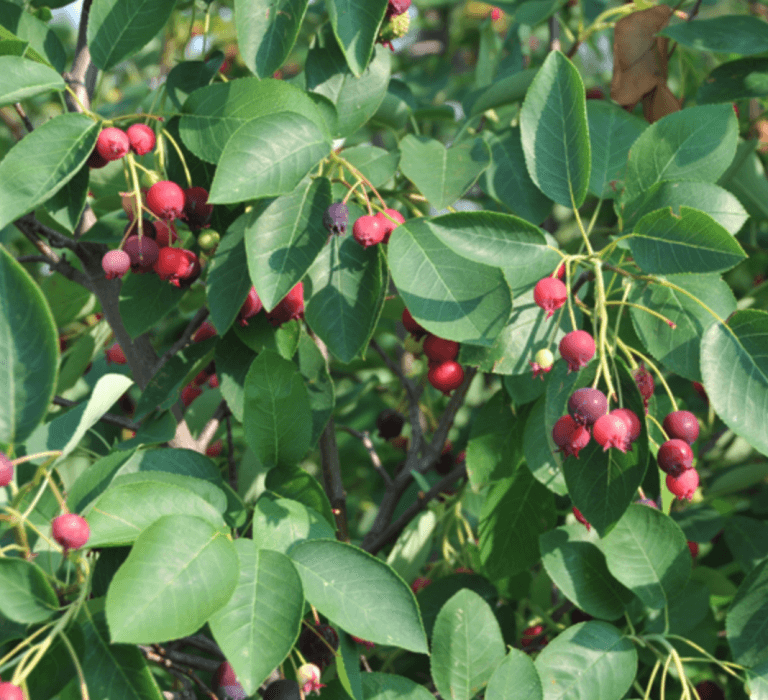

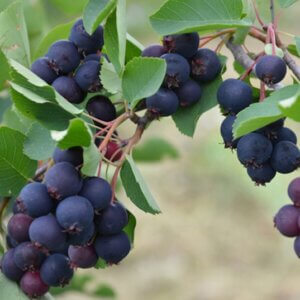
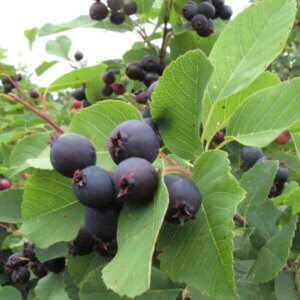
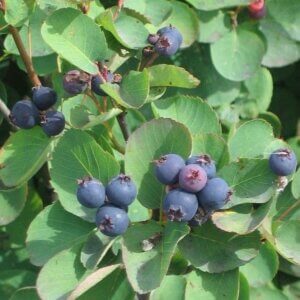
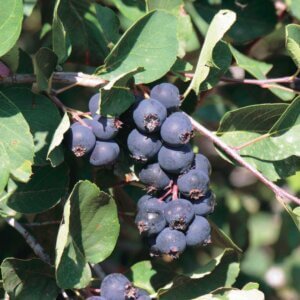
Also known as Juneberry, Serviceberry can be grown either as a mulit-stemmed shrub or it can be pruned into a single trunked tree. The bark is smooth and an attractive pale gray color that is especially beautiful in the winter. In spring, you’ll appreciate the beautiful, puffy clusters of white flowers, which simply cover the bare branches and are loved by butterflies and bees. Soon you’ll see the flowers give way to small green berries that gradually deepen into red, and finally turn a deep, rich purple in early summer. Serviceberries are sweet and taste like a mixture of almond, apple and blueberry. If you can pick them before the birds do they are great for eating fresh, baking or in preserves. Serviceberries were a commonly used sweetener for a traditional Native American dried meat pie known as Pemmican. As the leaves form, they start out a coppery green, slowly changing to a deep green in summer. In the fall the round leaves turn beautiful and blazing shades of red and orange, a real glory to see.
Tolerances:
Special Uses:
| Habits:
Possible Drawbacks:
|
Shopping Cart